
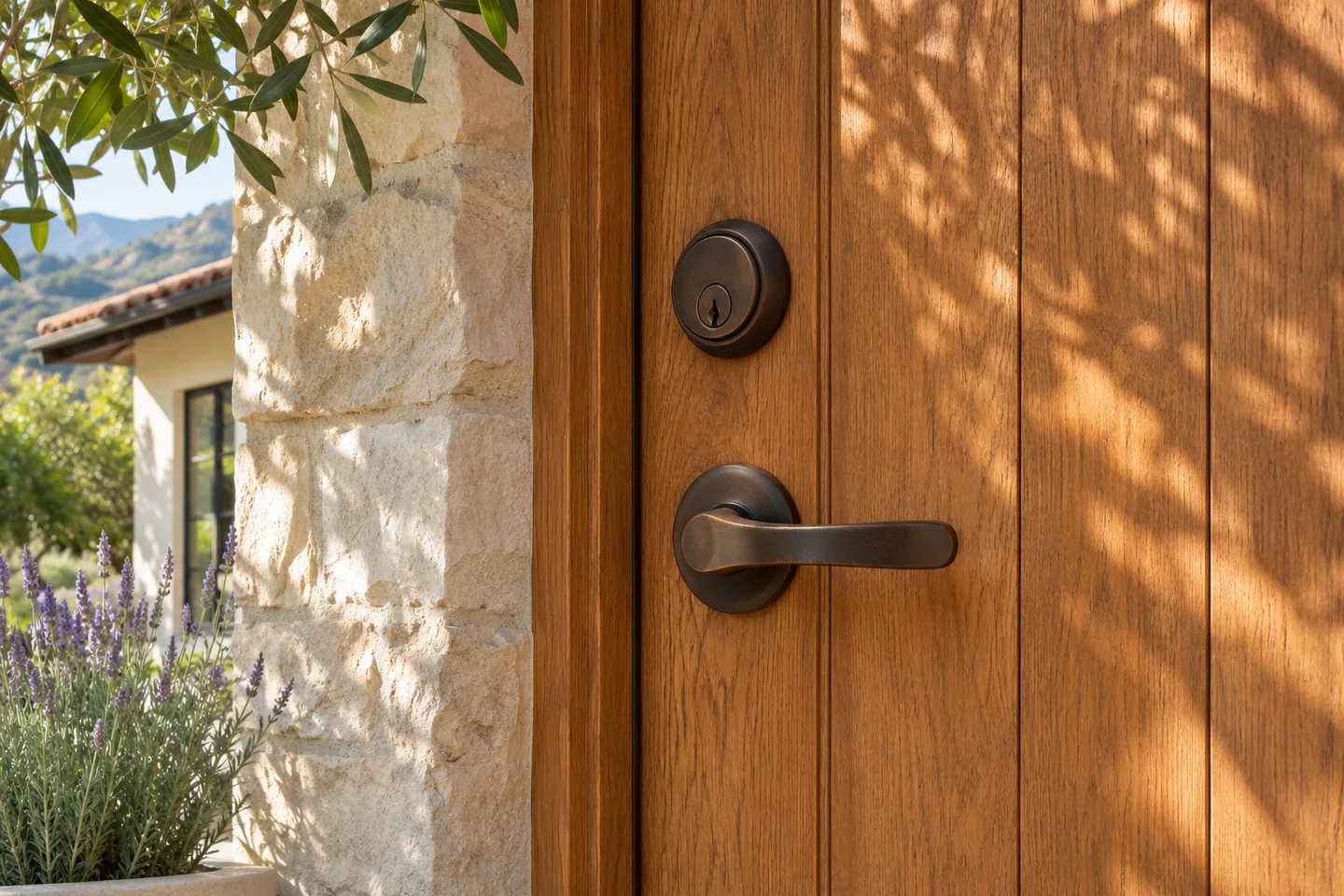
Describe the awkward part
A key that will not enter fully is different from one that turns but does not move the bolt. A loose handle is different again. Note which part moves, which part catches and whether the problem happens every time.
If another key is available, say whether it behaves the same way. Mention recent changes, such as new hardware or work on the door. There is no need to take the lock apart to explain the problem.
Include the door around the lock
The lock, latch, frame and door have to meet properly. If the bolt catches when the door is closed, a new key alone may not fix the fault. The fit of the entrance needs consideration along with the mechanism.
That matters where handles and finishes still suit the home. The first question is what has failed and whether it can be repaired. Worn, damaged or unsuitable hardware may need replacement, but that should follow assessment. Avoid forcing a stiff key; if one has snapped, keep the pieces and explain whether part remains inside.
Separate repair from key control
If the key works well but you no longer know who has copies, rekeying may be the useful conversation. Changing the working key does not itself repair a jammed cylinder or failed handle.
Sometimes both issues exist. After moving in, you may want new keys and a repair to the door from the garage. List them separately so the proposed work covers both. For electronic hardware, note the model and visible messages. A physical fault and an account or power issue may follow different paths.
Check the result in normal use
Call 818-338-5940 for lock repair in Agoura Hills. Describe the entrance, symptom and whether it is currently locked. A photo of the handle and door edge may help identify the hardware without dismantling it.
Ask which parts need attention, which can stay and how extra work will be approved. If replacement is proposed, include the existing holes, fit and finish in the discussion.
Once the work is complete, close the door normally, operate the handle and turn the key. Try supplied spares too. If the entrance still needs a special pull or second attempt, explain that before treating the problem as resolved.
A little more clarity.
Does a stiff key mean replacement?
Not necessarily. The key, cylinder, latch and door alignment may need checking. Identify where the resistance comes from before choosing parts.
What if the door is still open?
Mention its current position and whether the lock can still be operated. Do not force it closed or dismantle hardware merely to demonstrate the fault.