
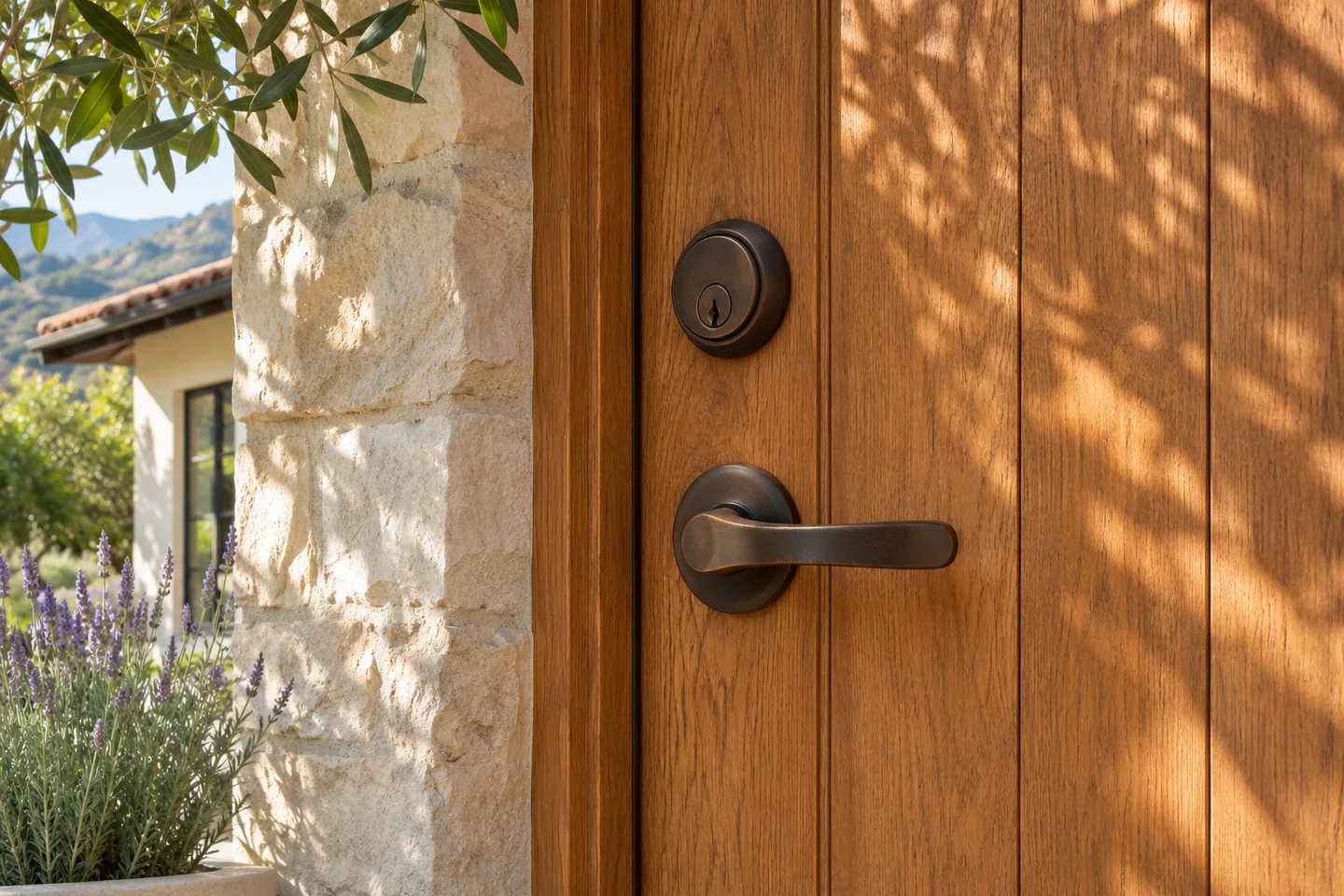
Make a door list before a shopping list
Walk through the entrances you will actually use. Include the front door, a side entrance and the door between the garage and house. Note which keys work where, and whether any lock has no working key.
Include doors that you want to keep separate. A home office or a room used by someone else may need a different arrangement from the main entrance. Keep shared building doors and managed access systems on a separate list; you may not have authority to change those.
Ask whether the existing lock can stay
Rekeying changes the key that operates a suitable lock. It can let you keep the handles and visible finish. Replacement changes the hardware itself. The right choice depends on condition, compatibility and how you want to use the entrance.
If the lock catches or the handle is loose, add that to the conversation. Rekeying does not repair a mechanical fault. A door that only locks when you pull it hard may also need its fit with the frame checked. Explain both concerns so one is not mistaken for the other.
One key is a plan, not a guarantee
Several compatible locks may be able to share a key. Two handles can match on the outside while using different key systems inside, so appearance is not enough to establish compatibility.
Before buying anything, discuss which locks you want grouped and which should remain separate. Keep your existing keys available until the work is finished and tested. If a replacement is needed, check how it fits the door's existing holes and other hardware as well as its color.
Remember the access that has no metal key
A keypad, app or garage remote may remain with a previous user even after you change a physical key. Identify each way into the property and find the model details or instructions you have.
Changing codes, users and account ownership is a separate task from changing a mechanical key. Ask who is responsible for each part and whether the manufacturer or system administrator needs to help. Do not assume that one service visit automatically removes every old access method.
Try the new arrangement as a household
Once the work is done, use the affected doors normally. Try every supplied key, then check whether the old keys have stopped operating the rekeyed locks. Make sure everyone who uses a handle or thumbturn can operate it comfortably.
Decide where spares belong and who receives them. A simple note is enough; you do not need to turn the house into a complicated key system. If you rent or belong to a managed building, confirm any requirements for providing keys to the landlord or manager.
For a move-in lock inquiry in Agoura Hills, call 818-338-5940. Bring the door list and explain which hardware you would prefer to keep. That gives the conversation a useful starting point.
A little more clarity.
Should I replace every lock after moving?
Not automatically. You can discuss changing key access while keeping suitable sound hardware. Damaged or incompatible locks may need a different plan.
What if I only received one key?
Say which doors it operates and whether any key is missing. Ask about the intended new arrangement before ordering spares or replacement hardware.